
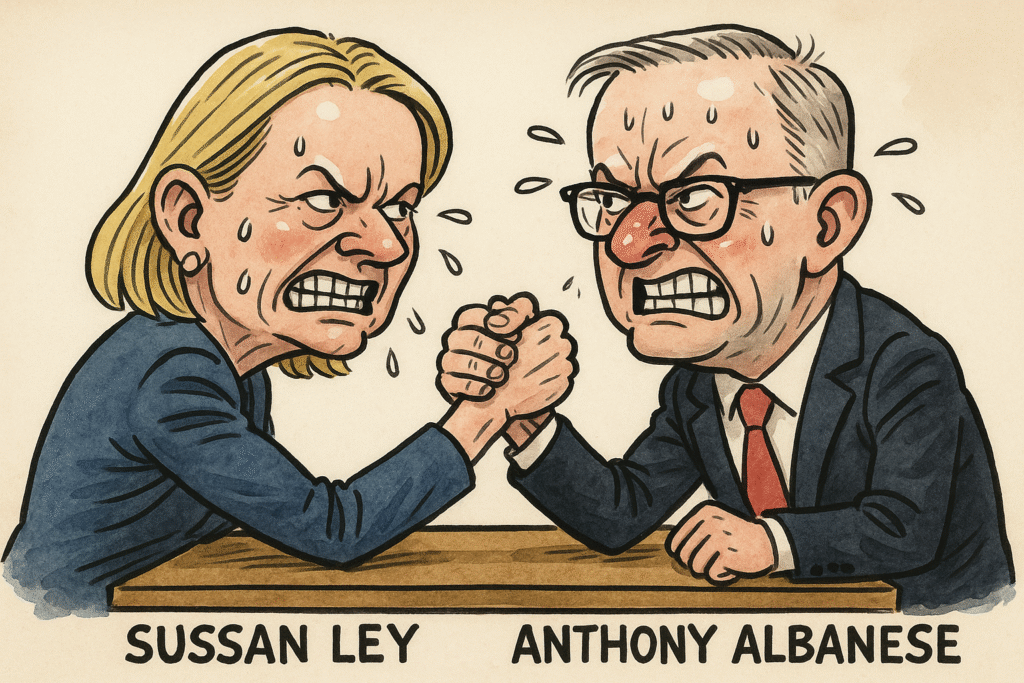
Australia’s 48th Federal Parliament convenes Wednesday July 2025, ushering in a striking shift in the nation’s political mood.
Rebounding from one of the most decisive electoral victories in decades, the Labor Party has filled the lower house with a wave of new faces empowered by a big-tent mandate. Across the chamber sits a battered Liberal-National Coalition, hammered in its worst electorate defeat in 80 years, dramatically reduced and now led by Sussan Ley, the first woman to hold the position in the party’s history. Both sides face their trials: a government caught between ambition and expectation, and an opposition struggling for unity amid rapid renewal. Over the next three years, the game will test the substance of policies and the very tone of Australian politics.
A Parliament Transformed
Labor’s swollen caucus is a sign of the trust Australian voters have placed in Anthony Albanese and his team. Labor now commands 94 out of 150 lower house seats, the party’s largest postwar majority, and more than enough to control the legislative agenda.
The Coalition, bruised by its historic defeat, files in with fewer parliamentarians than at any time since World War II. There is a conspicuous lack of Liberal faces on the opposition benches, serving as a visual reminder of the scale of public rejection and the challenge ahead for rebuilding. A major challenge for the Liberal Party is renewal and debates over quotas and recruitment persist.
The presence of Sussan Ley signals much more than a change in leadership. Early indicators are that her opposition will be less combative, more thoughtful and sometimes even supportive, where the national interest demands it. Already, the Coalition has stepped back from blanket opposition on issues such as student debt relief, indicating a willingness to collaborate on cost-of-living matters where Labor’s win has clarified popular sentiment.
Ley brings a softer edge after the polarising Dutton era, but her leadership is under immediate pressure. Policy fractures run deep, particularly over net zero carbon targets. With Nationals hardening against emissions policy and prominent Liberals openly debating the political wisdom of green commitments, Ley must walk a fine line between maintaining Coalition unity and aligning with mainstream voter concerns.
At the same time, internal dynamics have shifted. Traditional Liberal Moderates hope for a less divisive climate, while populist conservatives still call for a rightward tilt. Ley’s approach—a mix of backbench engagement and strategic inclusiveness—will be stress-tested in coming months, both in question time and behind closed doors.
Labor’s Big Mandate – And Big Expectations
With power comes expectations of delivery, and the government’s agenda for its first sitting is packed:
• Net Zero and Energy Transition: With its strengthened numbers, Labor is pushing hard for progress toward 82% renewable electricity by 2030 and net zero by 2050. Policies on hydrogen, clean steel and grid infrastructure are bolstered by promises for a strong carbon market and rejection of nuclear proposals.
• Childcare Reforms: Following national outcry on abuse and neglect in the sector, immediate legislative action is promised, including mandatory 24-hour reporting of serious incidents. The Labor agenda further calls for bans on harmful products like vapes, stricter digital oversight of children in an increasingly dangerous social media environment and proposals for an independent national watchdog. These reforms are shaped by intense public demand for transparency and accountability.
• Cost of Living: HECS debt relief hits Parliament first, cutting student loans by 20%. It’s a popular move and, notably, supported by the new opposition. Broader cost-of-living relief remains the defining battleground with affordable housing at the top of the list. Inflation and interest rate pressures shadow every government initiative.
• AUKUS, Defence and the US Alliance: The Albanese government faces a more unpredictable global climate with the US imposing fresh tariffs and reviewing the AUKUS submarine pact amid strategic re-evaluations in Washington. Australia’s new push for local missile manufacturing, seen as both a jobs driver and a nod to sovereignty, aims to demonstrate resilience, but much will hinge on international cooperation.
• China Relations: Labor’s reset with Beijing is showing encouraging signs, especially in critical minerals and agriculture. Diplomatic engagement aims to maintain stability, even as China remains both an economic powerhouse and a strategic rival. In stark contrast to the intellectual, softly-spoken Foreign Minister Penny Wong, the Shadow Foreign Minister is the conservative and occasionally flamboyant West Australian Senator Michaelia Cash. It will be interesting to watch how the two radically different styles and approaches will play out on the political stage at home and abroad.
Fault Lines and Future Perils
Despite post-victory unity, Labor is not immune to tension. With a crowded caucus, the contest for influence between veterans and newcomers will test party discipline. Leadership dynamics (such as between Prime Minister Albanese and Treasurer Jim Chalmers) are already the subject of quiet speculation.
On the opposition side, unity is fragile. The Coalition’s greatly diminished numbers amplify the voices of backbenchers and embolden ideological factions. Ley’s approach, involving greater backbench input and outreach, marks a break from the past but will have to survive public policy contests over everything from climate to housing and defence. Moreover, the Coalition has already experienced a trial separation in the immediate post-election period. It did not last long and the pair were a couple again in a week. But it highlights fundamental ideological differences in the Coalition, most notably in the Net Zero policy area.
Parliament’s New Optics
The composition and character of Parliament have changed in ways that reshape even the theatre of politics. The sight of a crowded Labor Party opposite a skeletal Coalition makes the scale of the electoral shift instantly visible to the public. Question time itself may become less of a shouting match, partly due to the optics of a woman leading the opposition for the first time. The enmity between one-time Liberal Leader Tony Abbott and Australia’s first woman Prime Minister Julia Guillard dragged the ancient issue of misogyny out into the public eye to be exorcised in an agonising and very public feud between the two. In 2025, it is unlikely a Labor leader would deal with a female opponent in anything less than a very correct manner, partly because the Labor Party wouldn’t tolerate it, but mostly because of what can be observed by Mr Albanese’s character.
Labor’s window of opportunity is real but short. The appetite for reform in areas such as childcare, energy, housing and economic management has grown and voters expect action. For the Coalition, the pressing question is whether unity and relevance can be rebuilt before the next election cycle is lost.
Both sides face the same fundamental test: to win arguments and show they can act with authority, credibility and vision in a time of challenge and change. The last election outcome was a real game-changer for both sides, but it’s not over yet. But at this point in the game, the Labor Party appears to hold all the really good cards – and lots of them.
More To Explore

Australia’s military defence must include cyber defence
Our political leaders are warning of armed conflict in the Indo-Pacific. But there’s more to worry us than bombs alone. Critical infrastructure (aviation, rail, telecoms, electricity, ports, etc) are always prime targets in any armed conflict.

The “Truth” – First Casualty of War
Western observers are often frustrated by the distinctly Russian and Chinese practice of declaring that something is false when it is known to be true and vice versa.